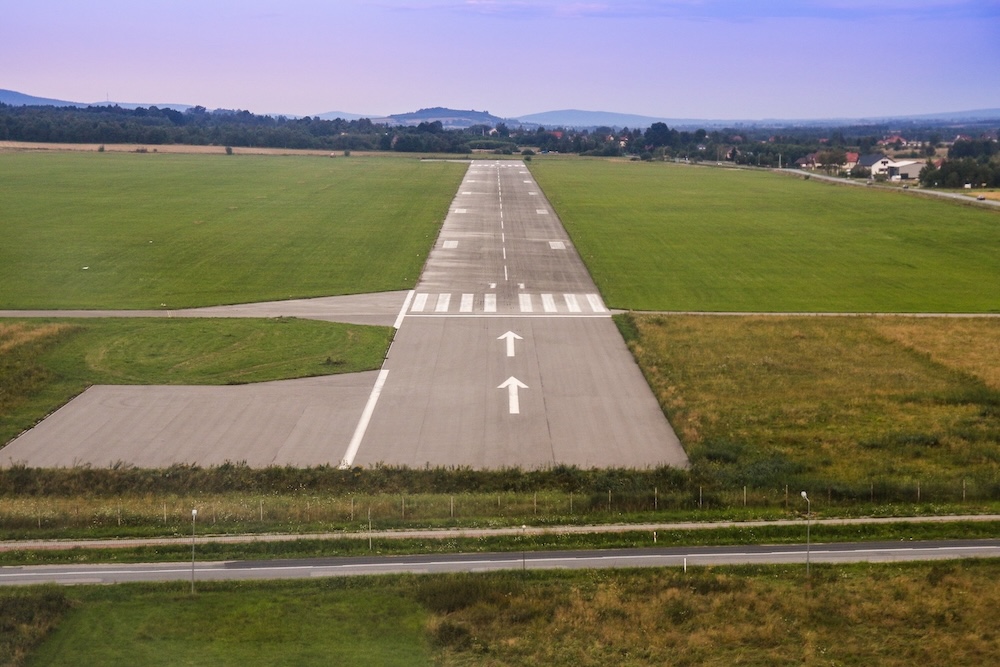
Runways leave little room for error. A missed clearance, a wrong turn, or a miscalculation can quickly turn a routine operation into a serious safety event. With aircraft taxiing and crossing active runways, and vehicles moving across the airfield in different directions, crews have a lot to track while also following clearances and handling ATC communications. Add time pressure, an unfamiliar airport, or reduced visibility, and even a small mistake can lead to a runway excursion or incursion.
Excursions and incursions are two of the most common types of runway safety incidents. While they are distinctly different events, both can result from seemingly minor errors and small oversights. A misunderstood clearance or a change in runway conditions may seem manageable in isolation, but small issues like these can compound quickly, leaving crews with little time to correct the situation.
Preventing Runway Excursions
Preventing a runway excursion starts before takeoff or approach. For takeoff, excursion prevention begins with preflight planning. Crews need a clear plan based on the conditions they are likely to encounter. That includes having an accurate picture of runway conditions, weather, aircraft performance, MEL restrictions, aircraft weight, and available stopping distance. When any of those factors change, the plan needs to change with them.
For landing, excursion prevention continues in the air, with the goal of flying a stabilized approach and touching down within the planned zone. To achieve that, crews need to reassess landing conditions during the flight (typically at the top of descent). Crews should expect conditions to change and compare actual reports against forecasts. This is the time to be a pessimist and plan for the most adverse conditions available, then add a safety margin of at least 15% to the calculated landing distance. If it is raining, don’t fixate on just the rain; consider the wind, pressure altitude, runway slope, and temperature, too. Crews should be especially cautious when a wet runway is combined with a tailwind.
Lastly, be mindful of flying the correct approach air speed as determined by the manufacturer. Some airplanes and manufacturers may specify adding a gust factor to your approach speed (usually half the gust factor to your approach speed), but other manufacturers have a set speed to fly in all conditions or a speed calculated by the FMS. This has been a big problem for aircraft like the Honda Jet, where pilots had a calculated airspeed for approach, but would then add a gust factor to it, which was against the manufacturer guidelines. This resulted in a greater than usual number of runway excursions for the aircraft.
The goal is not simply to respond to an excursion risk once it develops. It is to recognize the conditions that can create one early enough to prevent it from happening.
Preventing Runway Incursions
Runway incursion prevention comes down to knowing the aircraft’s position, understanding where it has clearance to go, and ensuring everyone involved has the same understanding. Simple enough, yet at a busy airport a misunderstood clearance can put an aircraft somewhere it shouldn’t be and create a safety risk.
Before the aircraft moves, review airport diagrams and the taxi route. Identify hot spots and remain mindful of weather conditions. Night, fog, snow, and rain can create low visibility. Know about any surface closures, copy the clearance accurately, and read it back. If there is any doubt or if the airport is unfamiliar, request a progressive taxi.
Crews should also pay attention to the airport environment itself. Faded or difficult-to-see surface markings and complex intersections can increase the potential for confusion and risk.
Keep at least one pilot heads-up while taxiing, and when approaching runway crossings or known hot spots, both pilots should be heads-up. Verbalize crossings, using “clear left” and “clear right” callouts.
Do keep in mind that not all airports have a tower(s) to manage ground and air traffic, so effective communication between pilots may fall more on the pilots themselves rather than a tower to manage all traffic.
Taxi speed matters as well. Time pressure can be a powerful force, but don’t let the clock dictate the pace of ground operations. Maintain a safe, controlled speed that allows sufficient time to react and stop if something unexpected happens. It is a lot easier to make a sudden stop at a slower speed. A few minutes saved during taxi is never worth sacrificing the margin needed to respond if something goes wrong.
Even crews doing everything right are operating in the same environment as other aircraft, vehicles, and personnel. While crews cannot control every movement around them, maintaining adequate time and space to react can help prevent another operator’s mistake from becoming a safety incident.
Additionally, Runway Status Lights, if and/or where installed, provide another layer of protection by giving pilots and vehicle operators a direct visual indication when it may be unsafe to enter or cross a runway. But remember, they are only a safeguard, not a substitute for an actual clearance. Conversely, if cleared by ATC but the status lights are still illuminated red, do not proceed.
Building Runway Safety Into Every Operation
Every flight begins and ends on the ground, and runway safety begins well before an aircraft enters or touches down on a runway. Preparation and disciplined procedures can help prevent both incursions and excursions before a routine operation becomes a safety incident. Building these practices into your SOPs, training, and safety management system helps make them second nature for every crew, on every flight.
Every operation is different. If you’d like to discuss how to build these practices into your SOPs and training, reach out to our aviation experts at info@gonimbl.com or by phone at (240) 546-4030.
Related Resources
View All
View All