It doesn’t matter if you’re just starting out as a brand-new Part 135 operator, or if you’re a seasoned pilot who’s been running a private charter operation for years; you’ll need to have a Safety Management System (SMS) in place by May 28, 2027.
The 14 CFR Part 5 SMS mandate is a promising sign that SMS is being prioritized in the private aviation industry. Since we all share the skies, it’s vital to have a system in place you can reference when encountering safety hazards, both for the safety of your crew and passengers and folks on the ground.
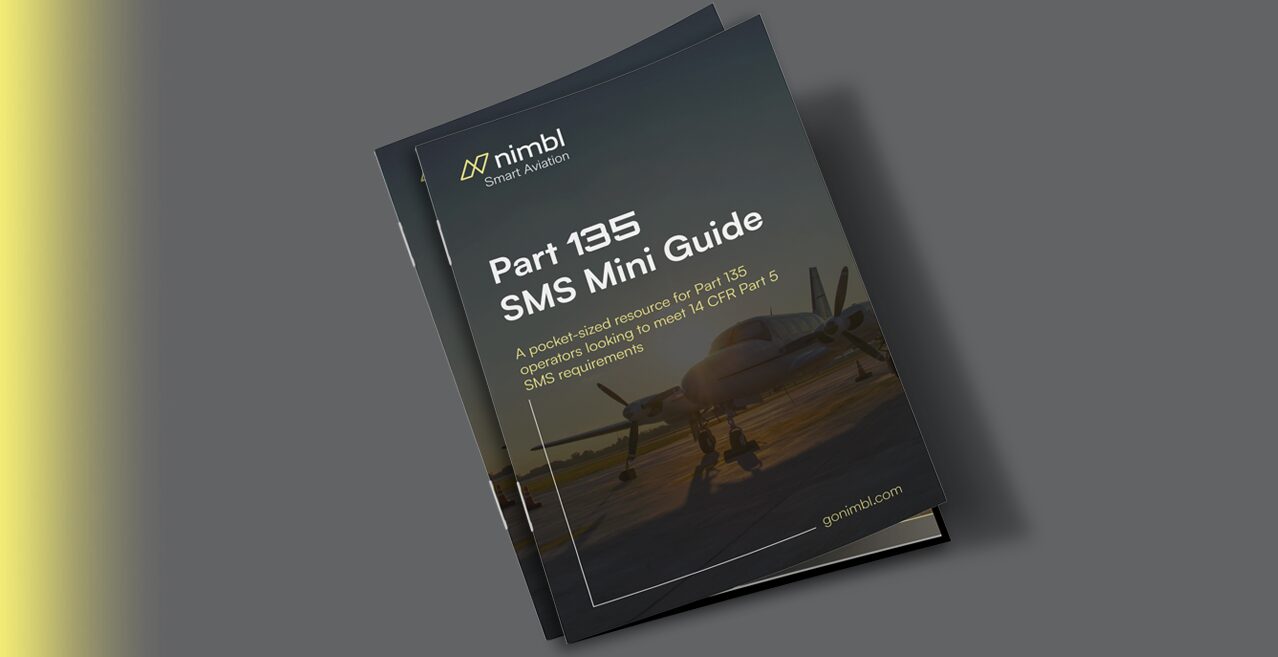
With that being said, it can be difficult to distinguish what the basic requirements are vs. what’s just “extra credit.” If you’re having trouble in that department, our Part 135 SMS Mini Guide is a great place to start.
It’s important to take a piece-by-piece approach when implementing SMS. If you rush to start using an SMS program that hasn’t been carefully constructed to meet your operation’s specific needs, you’ll end up with an SMS that doesn’t stick or can’t be used at all.
Our Mini Guide provides an example roadmap of what SMS implementation could look like in your operation over the course of one year.
We’ll cover these basic steps and their specifications:
- Drafting your Safety Policy
- Describing your SMS processes for dealing with risks
- Describing how you will ensure your SMS is effective
- Describing how you will communicate with your team about safety
- Noting how/where you will keep your records
- Drafting your Emergency Response Plan
You don’t have to go through it alone when it comes to SMS. Contact our team for advice and support, and remember to download your complimentary Part 135 SMS Mini Guide
Related Resources
View All
View All

Ground Operations Checklist
Learn more
Annual Safety Report
Learn more

The Most Common Risks Operators Face Day to Day
Learn more
LOA Streamlined Process: Everything You Need to Know About the Smarter, Faster Way to Get Your LOAs Approved
Learn more